0

Ancestry.com launches Web Search


Eric Shoup of Ancestry.com announced the release of Ancestry Web Search at a reception Thursday night of the 2011 NGS Conference. Once burnt by their Internet Biographical Collection, Ancestry.com is not shy about explaining how this time things have changed.

The Internet Biographical Collection

The Internet Biographical Collection (IBC) was a collection Ancestry.com released on 26 August 2007. It consisted of copies of web pages containing genealogically relevant information. The copies were made without warning to or permission from page owners. See Becky Wiseman’s “Is this Fair Use?” and another example from USGenNet for examples showing how the IBC worked.
Hundreds of people blasted Ancestry.com. Dozens of bloggers flogged them. Page owners objected. And Ancestry.com capitulated. Just three days after launch, Ancestry.com pulled the plug on the collection.
My favorite flogging was done visually:
 
Susan K. Kitches, image composer, “Ancestry.com Scrapes Websites,” Family Oral History Using Digital Tools(http://familyoralhistory.us : dated 28 August 2007, accessed 21 May 2011).

Web Search versus IBC

Ancestry.com says they have addressed the complaints made about the original version of the IBC. Here’s my comparison:
Internet Biographical CollectionWeb Search
Made copies of owners’ web pages without their knowledge or approval.Sites can be added or removed by owner request. I think I asked and Ancestry.com said that they had the permission of the three sites that they have currently indexed.
Required subscriptions. (On the 28th, Ancestry.com opened the collection to registered users.)Anyone can use it.
Result lists contained links to Ancestry.com’s copies of the pages, not the owners’. This deprived owners of several benefits, including advertisement revenues.No improvement. Still no links to owners’ pages.
Result pages contained information abstracted from the owners’ pages.Same. Ancestry.com’s stated intent is to limit the information shown so users are incented to click through to the owners’ pages.
Result pages contained links to Ancestry.com’s copies of the pages, not the owners’. (On the 28th, Ancestry.com supplemented the links to their copies with links to the owners’ originals.)Result pages contain links to the owners’ websites.
Ancestry.com made nearly complete copies of owners’ web pages, including text and graphic design. Many felt this was a clear violation of the law. I felt that they had, indeed, crossed the line, but that they were playing in a gray area and had not wantonly violated the law.Does not copy others’ pages. I believe this is the key difference between the IBC and web Search.
Citations did not specify the original sources. Thus, citations did not give credit to the owners.Citations do not specify the derivative sources.
Thus, citations do not disclose Ancestry.com’s involvement. They need to read my series oncitation principles so they understand why a citation needs to specify both the derivative and the original.
Links went directly to the pages with the indexed information.Links do not go directly. Links go to the search page and users must retype the search parameters. This might be owners’ preferred behavior, but as a user I’d like the links to take me directly to the results.
Indexed the same content as search engines likeGoogle.According to Ancestry.com’s Brian Edwards, Web Search indexes deep web content, stuff you can’t find doing a Google search.

Ancestry.com seems to have followed the advice of fellow blogger, Randy Seaver.
I wish that Ancestry would carefully consider the reaction to adding a database like this before they do it.
I spoke with Web Search product manager, Brian Edwards. He said, “We’ve spoken with many members within the genealogical community to try to make sure we approach this in the right way.” He said Ancestry.com believes it’s important to respect the wishes of the owners of the content indexed by this new product.

Really? No Caching?

Caching others’ web pages (copying, really) was at the heart of the IBC controversy. If you know where to look, Google.com has links to cached copies of indexed pages. As I wrote this on Saturday, I experienced the downside of Ancestry.com not caching pages. IndyGov.org, the website indexed by “Web: Marion County, Indiana Marriages since 1925,” was down. Ancestry.com's misuse of caching in the IBC may have poisoned the possibility of using it now.
Google caches copies of inde
Google caches indexed pages
I think web page owners will be more amenable to Web Search than to the Internet Biographical Collection. And I think Ancestry.com haters and conspiralists will like it in their own way; it gives them more fodder. But I’m not so certain about the rest of you. What do you think?


Private message to Brian Edwards: In our interview I mentioned I wondered if Google.com might be doing deep web searches on some websites. While researching this article, I came across an example of why I think this might be so. I did a Google search for ["internet biographical collection" (source OR citation)]. I clicked on one of the results, Kimberly Powell’s “Cache 22” article. The page came up with my search terms already in the About.com search box. Interesting, huh?
0

The Biggest Loser Winner is ...


Olivia Ward is now a living, breathing testament to the benefits of determination and putting one's mind to accomplishing a goal, no matter how substantive.
After an incredible 129-pound weight loss over a span of eight months, the New York City opera singer was crowned Season 11's Biggest Loser on NBC Tuesday.
Here's a before-and-after display of what she achieved:
Olivia Ward Before The Biggest LoserOlivia Ward After The Biggest Loser
Ward and sister Hannah Curlee became breakout stars following a sensational run during the trip to New Zealand earlier this year, both making the finals.
Also in the final four ahead of the finale were Irene Alvarado and Jay Jacobs, who vied for America's vote and the right to compete for the ultimate prize.
Joining Hannah and Olivia in an all-female final three was Irene, who became a best buddy to the Purple Team during the season. All four were worthy.
In the end, it was Olivia Ward who edged the competition and was crowned the winner. But obviously, all of these giant losers were winners last night!


Read more: http://www.tvfanatic.com/2011/05/the-biggest-loser-winner-is/#ixzz1NN9tA8YX
0

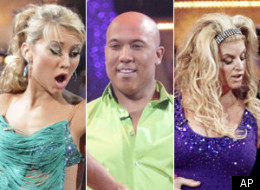
Dancing With The Stars' Winner: Hines Ward, Kym Johnson Win Season 12 Mirror Ball Trophy


Dancing With The Stars WinnerLOS ANGELES — It's become a proud athletic tradition: Winning "Dancing With the Stars."
When Hines Ward took home the mirrorball trophy on the hit show Tuesday, he joined its winningest group of alumni: Athletes. Professional athletes have taken the "Dancing" title six times in the past 12 seasons.
Since the show premiered stateside in 2005, three Olympians, two football stars and one race-car driver have been named "Dancing" champs. Three other NFL stars and an Olympic skater finished the popular show in second place.
Ward, a Pittsburgh Steelers wide receiver and former Super Bowl most valuable player, credits his professional dance partner, Kym Johnson, with their dance victory. He plans to keep his new mirrorball right next to his Super Bowl trophy.
"It's special," the 35-year-old said, glittery trophy in hand. "With football, it takes all 53 guys. With this mirrorball, it was just Kym and I together in the studio putting in the hours. I'm just glad I didn't let her down."
Ward consistently posted high scores throughout the 10-week competition, and judges praised his showmanship and dedication.
"We've had some great footballers on `Dancing With the Stars,' but I don't think any compare with Hines Ward," head judge Len Goodman said during the season finale.
Ward was up against Kirstie Alley and Chelsea Kane for the season 12 title. The actresses finished second and third respectively.
His commitment was especially evident after Johnson suffered a serious neck injury during rehearsals two weeks ago. The couple triumphantly returned to the dance floor, earning perfect scores for their performance and drawing tears from Ward, Johnson and judge Carrie Ann Inaba.
0

Haiti candidate to challenge elections results

Supporters of presidential candidate Michel Martelly demonstrate in Port-au-Prince, Haiti, Wednesday Dec. 8, 2010.  Supporters of eliminated candidateAP – Supporters of presidential candidate Michel Martelly demonstrate in Port-au-Prince, Haiti, Wednesday …
PORT-AU-PRINCE, Haiti – A popular singer vowed to legally challenge election results that narrowly ousted him from Haiti's presidential race, while his supporters barricaded streets and set fires in violence that threatened the fragile stability that followed a devastating Jan. 12 earthquake.
Michel "Sweet Micky" Martelly urged his backers on Wednesday to nonviolently protest results from Nov. 28 presidential elections that demonstrators say were rigged. His campaign manager later said they would formally challenge the tallies released late Tuesday to Haiti's Provisional Electoral Council.
His supporters carried pink signs with the smiling face and bald head of Martelly, built street barricades, challenged heavily armored foreign soldiers and used government campaign posters to start fires.
"We want Martelly. The whole world wants Martelly," said James Becimus, a 32-year-old protester near the U.S. Embassy. "Today we set fires, tomorrow we bring weapons."
Other protesters said they would continue to mobilize but do so nonviolently.
"Demonstrating without violence is the right of the people," Martelly said. "I will be with you until the bald-head victory."
Outside the electoral council headquarters in the suburb of Petionville, young men wearing their shirts as masks threw rocks at U.N. troops. The soldiers — Indians and Pakistanis working as a single unit — responded with exploding canisters of tear gas that washed over a nearby earthquake-refugee camp, sending mothers running from their tarps with their crying, coughing children in tow.
Protesters set fire to the headquarters of outgoing President Rene Preval's Unity party, traded blows with U.N. peacekeepers and shut down the country's lone international airport.
Preval had earlier urged the candidates to call off the protests. He acknowledged there had been fraud in the election, but said it was typical of elections around the world.
"This is not how the country is supposed to work," he told demonstrators in a live radio speech. "People are suffering because of all this damage."
The fallout from the fraud-riddled shut down cities across impoverished Haiti at a moment when medical aid workers need to tackle a surging cholera epidemic that has claimed more than 2,000 lives.
Haiti's Radio Kiskeya said in an unconfirmed report that at least four demonstrators were killed — three in Les Cayes, about 120 miles (193 kilometers) west of Port-au-Prince in the country's southern peninsula, and one in the northern city of Cap-Haitien.
Martelly, a popular carnival singer, narrowly lost a spot in a runoff election to Jude Celestin, a political unknown viewed by supporters and detractors alike as a continuation of Preval's administration. The U.S. Embassy criticized the preliminary results Tuesday, saying Haitian, U.S. and other international monitors had predicted that Celestin was likely to be eliminated in the first round.
Preval shot back at the U.S. Embassy's reproach, saying, "The American embassy is not the (electoral council)."
State Department spokesman P.J. Crowley said the U.S. is not fomenting the unrest.
"The United States is in no way responsible for the actions of any individual. What we are determined to help Haiti achieve is a credible election and a result — not one that the United States will impose — but one that the people of Haiti can participate in fully," he told reporters in Washington.
Preval's administration has been condemned by many Haitians for failing to spearhead reconstruction of the country after the earthquake. More than an estimated 1 million people still live under tarps and tents and little of the promised international aid from the United States and other countries has arrived.
Preliminary election results put Celestin ahead of Martelly by just 6,845 votes for second place. Former first lady and law professor Mirlande Manigat took first place with 31.4 percent of the vote, while Celestin had 22.5 percent and Martelly 21.8 percent.
The top two candidates advance to the Jan. 16 second round.
Manigat also told Haitian radio that she felt her reported vote tally was low. Celestin's managers said before the election that they had expected both a first-round victory and to be accused of fraud.
Thousands were disenfranchised by confusion on the rolls, which were overstuffed with earthquake dead but lacked many living voters. There were reported incidents of ballot-stuffing, violence and intimidation confirmed by international observers, but U.N. peacekeepers and the joint Organization of American States-Caribbean Community observer mission said the problems did not invalidate the vote.
Turnout was low. Just over 1 million people cast accepted ballots out of some 4.7 million registered voters. It is not known how many ballots were thrown out for fraud.
Martelly had joined with 11 other candidates, including Manigat, to accuse Preval of trying to steal the election while polls were still open.
An appeals period is open for the next three days, and election observers said a third candidate might be included in the runoff if the electoral council decides the first-round vote was close enough — though the constitutionality of such a move would be debatable.
U.N. Secretary-General Ban Ki-moon expressed concern "about allegations of fraud" and "the acts of violence that have taken place in the aftermath of the announcement," U.N. spokesman Martin Nesirky said at U.N. headquarters in New York.
He said all candidates have a responsibility to encourage their supporters to refrain from violence.
American Airlines canceled all flights in and out of the Haitian capital because airport employees were unable to get to work Wednesday because of demonstrations, spokeswoman Martha Pantin said. Flights will also be canceled on Thursday.
0

Android activation rate now over 300,000 per day; blazes past iPhone

Andy Rubin, head of Google’s Android team, doesn’t talk to his 15,000+ twitter followersvery often. In fact, he’s only tweeted once before, and it was little more than a quick retort lobbed in Steve Job’s direction after he questioned Android’s definition of openness.
This evening, he let out but nine more words:

There are over 300,000 Android phones activated each day.
This is mammoth growth over the numbers disclosed just four months ago, when Google head honcho Eric Schmidt proudly proclaimed that they were seeing just (and we use that word in the loosest sense) 200,000 activations per day.
At this point, it’s pretty safe to say that Android is outselling the iPhone by a notable margin. Hell, it’d be ridiculous if it wasn’t; Android’s on a few dozen devices, while the iPhone is just the one. Solely for comparison’s sake: Apple sold 14.1 million iPhones last quarter; day-by-day, that breaks down to around 157,000 units. Now, that’s just the iPhone — it doesn’t include the iPad or iPod Touch. But unless Andy Rubin’s getting a bit fuzzy with his definition of “activations”, their 300,000 is presumably almost entirely phones as well.
0

Google's big week: Nexus S, Honeycomb tablets, Chrome OS laptops, and eBooks to boot


We gotta hand it to Google: if its goal was to own the technology news cycle for 48 hours, mission accomplished. The Mountain View-based company spent the first two days this week laying out pretty much every big announcement it possibly could: a new flagship phone coming next week (the Nexus S), a new Android build (2.3 Gingerbread), a preview of the next Android build (Honeycomb) on a never-before-seen Motorola tablet, the debut of its cloud-based laptop platform (Chrome OS) with hardware, and a giant plunge into the growing e-book market -- and that isn't everything. We've done our best to condense all the days' highlights into something easier to digest, so read on for a recap on all things Google! 

Nexus S and Android 2.3 Gingerbread


We've been following the Nexus S saga for just under a month now, when we first broke news of its existence (and even published the first pictures of the device). This past Monday, Google officially announced the Nexus S, a 4-inch WVGA "contour display" phone featuring triband HSPA with AWS support (no HSPA+, seemingly), 5 megapixel camera, 16GB of onboard storage, 512MB of RAM, a 1GHz Cortex A8-based Hummingbird processor (similar to the iPhone 4), and Android 2.3 Gingerbread (more on that later). In a rare move, the Nexus S also supports Near Field Communication (NFC), which works to send and / or receive information when within about four inches of the target. There's not a lot of practical use for it in the US right now, but Google's hoping to jumpstart the trend. Check out our full preview here.

The biggest draw of the Nexus S, though, would have to be Android 2.3 Gingerbread (a perfect codename for the season). The latest update improves upon 2.2 Froyo with some subtle UI enhancements, including a keyboard that now supports multitouch and finger-sized markers for highlighting text / better copy-and-paste. There's also tightly-integrated VoIP support, video calling support via a front camera, gyroscope support, NFC integration, and a built-in task manager (finally). Most notably, the new build is being called out as significantly better for game development, tying in nicely with all these Sony Ericsson rumors we've been hearing as of late. Nexus One users, who seem prone to always receiving Android updates before most, should receive Gingerbread soon, and come CES / Mobile World Congress, we'd be surprised if we didn't find dozens of devices running the OS.
The Nexus S is officially rolling out December 16th to Best Buy stores in the US (and December 20th at Best Buy and Carphone Warehouse retailers in the UK), subsidized at $199 with a two-year T-Mobile contract or $529 unlocked. 

Google eBooks 


Also that morning, Google, always with its finger on the pulse of our ever-evolving digital lifestyles, has decided to take a wild stab at this nascent market, and launch Google eBooks. Formerly known as Google Editions, the Google eBooks ecosystem is actually a pretty grand gesture, and seems to combine most of the positives of the primary e-book contenders (Amazon, Barnes & Noble, andApple, naturally), while skimping on the UI flourishes, in traditional Google fashion. Books you buy are stored in the cloud, with your progress synced Whispersync-style, and can be read on your choice of native Android, iPhone, or iPad apps; from your browser; or on any device that supports the Adobe Digital Editions DRM for PDF and ePub files, which includes the B&N Nook and the Sony Reader (and plenty of other devices). Google is also trading on its vast repository of public domain books, with 3 million free eBooks on offer at its Google eBookstore, in addition to traditional paid fare. It's certainly a crowded market, full of sharp elbows, but it seems Google is having no trouble adjusting. 

Honeycomb and the mystery Motorola tablet

Later that evening, it was time for Google's Engineering VP / Android mastermind Andy Rubin to take the stage at the D: Dive Into Mobile conference (check out our liveblog for play-by-play from the event). Surprising to us, Rubin said -- after some prodding from Walt and Kara -- that Android is indeed profitable by itself. He attributed a lot of the platform's success to its openness, so much so that he even seemed to support Verizon's decision to swap out Bing as a "feature" of the open platform. "Well that's consumer choice, they vote with their wallet on one side and their feet on the other" -- we have a hard time pinning the responsibility here on the choice-deprived consumer (as opposed to the overzealous carrier), but that's just us.


But then there was the hardware. Rubin had a Nexus S on hand, but by then our focus was on his second surprise: a prototype Motorola tablet running the next version of Android, codenamed Honeycomb (Stingray, is that you?). The button-less device has video chat, an NVIDIA processor, a "dual core 3D processor," and a more desktop-like UI that better caters to the tablet environment than current Android, including a bottom dock of icons (Gmail, for example, looked a lot more like its iPad counterpart). Rubin used the tablet to show off the latest Google Maps for Mobile update, which has dynamically-rendered vector drawings of cityscapes now, two-finger tilting and rotating, gyroscope support, and caching for offline view of your most-visited areas. You can check out the tablet and Maps in the video above.

Honeycomb won't just be for tablets: Rubin said it'll be coming to phones, too. He didn't much else to say on the build -- after all, Gingerbread isn't even out yet -- but we should expect to see it "
 sometime next year."
Chrome OS and Cr-48

So, that was all Monday. The next day, Google held a Chrome press event to talk about -- what else -- its browser and browser-based OS of choice (check out our liveblog for the play-by-play). Showcasing integrated Instant Search for the next Chrome was a no-brainer but still very impressive to see, but the first big reveal was the final Chrome Web Store (which launched later that day). Google sees the store as a portal for great web content, with purchases tied to your Google account. And the web apps we saw were pretty good (if not very similar to their iPad counterparts) and will run in any browser that supports the "standard web technologies." There's some gaming, but from what we've seen so far ("you pop it!"), it's nothing you're gonna be focusing a lot of time on.

Then came the Chrome OS laptops. It just takes four steps and less than a minute to set up a brand-new Chrome OS machine -- it pulls all your Chrome themes and settings from the cloud, so it's ready to go almost right away, and changes can propagate in less than a second in some cases. The reference machine demoed was able to come back up from sleep almost instantly -- Google says the limiting factor is actually how fast the user can move their hand. (It wasn't that fast in the demo, but it was still really fast.) The OS also supports multiple accounts with a guest account that runs in Incognito mode, and all user data is encrypted by default. The OS itself is loaded on read-only memory that can't be altered without physical access -- a tech which enables verified booting. (A "jailbreak mode" switch on the developer units lets you install whatever you want, but we'll see what the final machines support.) What's more, the OS will be automatically updated every few weeks -- the goal is for it to get faster over time, not slower.

There's also offline capability -- Google Docs was demoed running offline, with changes synced when the machine reconnects. It seems like that's an app-specific feature though -- apps on the Chrome Web Store have to be built for HTML5 offline to work, obviously. Google also demoed Google Cloud Print, which allows you to print on your home printer from anywhere. Chrome OS devices will also be able to use new Verizon 3G plans for offline access -- you'll get 100MB of free data per month for two years, and then plans start at $9.99 for a day of "unlimited access" with no contracts required. (There will eventually be international options, but those weren't detailed.)


There are still some unfinished bits though -- there's no support for the USB ports on the machines yet, and there are still some performance tweaks and bug fixes to come. (Don't expect ever being able to connect a printer, as the company thinks its Cloud Print service is a better option.) The OS will come on Intel-based machines from Acer and Samsung in mid-2011 -- and "thousands of Googlers" are using Chrome OS devices as their primary machines. An unbranded 12-inch reference machine called Cr-48 will be available for developers -- read more about that here.

Overall, Chrome OS is very much a modern riff on the "thin client" idea from the 90s -- an idea that Eric Schmidt himself pioneered while at Sun. Indeed, Schmidt took the stage at the event to explicitly draw the connection, saying that "our instincts were right 20 years ago, but we didn't have the tools or technology." That's a pretty wild statement -- and now Google has to deliver.
0

hitman?

Lethal: Mark Chapman as played by Jonas Ball in The Killing of  John LennonLethal: Mark Chapman as played by Jonas Ball in The Killing of John Lennon
For many baby-boomers whose formative years coincided with the Swinging Sixties, a mild Monday in early December 1980 will always be remembered as the day the music died.
In New York, the enigmatic, charismatic – and frankly often loony – ex-Beatle John Lennon staggered into the entrance hall of the Dakota, the exclusive parkside mansion block that had been his home for nearly eight years.
The cassettes of a new song the 40-year-old had just recorded, called Walking On Thin Ice, clattered to the floor as he collapsed – blood flowing from four gunshot wounds.
Lennon had been heading home late from work and was hoping to catch his five-year-old son, Sean, before he went to bed.
He and Yoko Ono, his wife and musical collaborator, had been dropped by their white limousine on the pavement outside the building rather than driving through the gates and into the building’s secure courtyard.
Yoko hurried on ahead, nodding blankly at a stranger in the shadows — there were always fans and hangers-on lurking outside the Dakota for a glimpse of their hero.
Her husband trudged behind and had taken three or four strides when a voice called out: ‘Mr Lennon?’
The star slowed and then turned to look. Instantly, he registered that he’d seen this man a few times lately — and, earlier that day, had even autographed an LP cover for him.
But now the stranger had a different purpose. He was down on one knee in a combat stance, a .38 revolver clasped in his hands.
Five shots rang out and four dum-dum bullets, specially adapted to cause maximum physical damage, slammed into Lennon’s back, side and shoulder.
The musician got as far as the lobby before blurting out: ‘I’m shot! I’m shot!’ He was dead on arrival at hospital a quarter of an hour later.
Meanwhile, the killer, pudgy 25-year-old Mark Chapman, stood quietly at the scene. On the ground lay the smoking gun he had let fall from his hands, beside Lennon’s blood-stained glasses.
Leaning nonchalantly against the wall of the Dakota, Chapman then began flicking through a copy of Catcher In The Rye, J.D. Salinger’s famous novel of adolescent alienation, whose central character was apparently the inspiration for what he had just done.
When the cops arrived, he made no attempt to escape. As his hands were cuffed and he was bundled into a squad car, he explained: ‘I acted alone.’ At precinct headquarters, he told detectives: ‘Lennon had to die.’
To a world shocked by Lennon’s violent and seemingly pointless death, it became clear that Chapman was a delusional nerd. He took drugs and was psychologically disturbed.
Bullied at school, he sought refuge in an imaginary world where he exercised power over other people.
A rootless adult who never settled into a proper job, he found solace for his empty life in the music of The Beatles. A loner himself, he identified with the reclusive side of Lennon’s insecure, mixed-up personality.
But revelations of Lennon’s vast wealth and burgeoning business empire turned Chapman’s hero-worship on its head.
He felt betrayed, personally insulted. He stalked and shot his erstwhile hero out of a weird sense of retribution — coupled with a desire to be famous for something.
So the story went. But, with the 30th anniversary of Lennon’s death next week, a theory has resurfaced that challenges this long-held conventional view.
Though seemingly far-fetched, if true it would startle and appal the millions of fans who still idolise Lennon.
In a new book, author Phil Strongman claims that Chapman was a stooge. Lennon’s real assassin was the CIA — at the behest of Right-wing fanatics in the American political establishment.
He gets to this controversial conclusion by contesting many of the so-called ‘facts’ about the case — including the basic assumption that Chapman was a Beatles and Lennon fan.
Strongman writes that, until the weekend before the killing: ‘Chapman, the supposed Lennon “obsessive” and “fan of fans”, did not own one Lennon single, book or album. Not one. Some “fan”, some “obsession”.’
He dismisses the often-made claim that Chapman had 14 hours of tapes of Lennon’s songs in his rucksack on the day of the shooting. ‘They have never been photographed or produced for the simple reason that they do not exist.’
So Chapman wasn’t just a celebrity stalker who went too far. Nor, says Strongman, did he kill Lennon for 15 minutes of fame.
‘If he was an attention-seeker, then why did he turn down the chance of what would have been the trial of the century? By pleading guilty, Chapman missed all of this attention he was supposedly seeking. Why?’
t is the killer’s calmness after the shooting that Strongman sees as the key to what really happened, providing evidence for his theory that Lennon’s death was a state-sponsored conspiracy.
If Chapman looked like a zombie, as he hung around after the killing and waited for the police, it was because that was exactly what he was.
Chapman, he suggests, had been recruited by the CIA and trained by them during his travels round the world, when he mysteriously pitched up in unlikely places for a boy from Georgia.
How strange, for example, that Chapman should visit Beirut at a time when the Lebanese capital was a hive of CIA activity — and was said to be home to one of the agency’s top-secret assassination training camps. Another camp
was supposedly in Hawaii, where Chapman lived for a number of years.
And who funded the penniless young man’s round-the-world trip in 1975, which took in Japan, the UK, India, Nepal, Korea, Vietnam and China?
Money never seemed to be a problem for Chapman, but no one has ever explained where it came from. The distinct possibility remains, in Strongman’s opinion, that the secret service was his paymaster.
And somewhere along the line his mind was infiltrated. With Chapman, the CIA could have drawn on its long experience of using mind-controlling drugs and techniques such as hypnosis to produce assassins who would eliminate trouble-makers, and ‘patsies’, the fall guys on whom such killings could be blamed.
Strongman claims: ‘Catcher In The Rye was part of Chapman’s hypnotic programming, a trigger that could be “fired” at him by a few simple keywords [via] a
cassette tape message, telex or telegram or even a mere telephone call.
’It’s certainly true that conspiracy theorists have long suspected both the Americans and their communist foes of using such techniques to activate ‘sleeper’ assassins — as fictionalised in the film The Manchurian Candidate.
The author is uncertain whether Chapman fell into the category of unwitting killer or unwitting accomplice.
But his deep suspicion is that Chapman did not act alone — any more, he says, than Lee Harvey Oswald did in the murder of JFK in Dallas or Sirhan Sirhan in Bobby Kennedy’s death. He even doubts if Chapman fired the fatal shots.
‘The bullets slapped into Lennon’s body so closely together that pathologists later had trouble marking out the different entry points. If all of these shots came from Chapman, it was a miraculous piece of shooting.
‘In fact, if any of them came from him it was miraculous because Chapman was standing on Lennon’s right and, as the autopsy report and death certificate later made clear, all Lennon’s wounds were in the left side of his body.’
There had to be another shooter involved, Strongman insists. He suggests that a CIA plant who worked at the Dakota building was the real killer.
What increases his suspicion is the cursory nature of the police investigation after Chapman’s arrest.
‘His bizarre post-killing calm was not questioned, his behaviour was not checked with a drugs test, his “programmed” state [a word used about him by more than one police officer] was not investigated, his previous movements were not thoroughly looked into.
‘Put simply, the authorities’ investigation, or lack or it, into the assassination was shockingly slack and beggars belief.’
It had to be, he concludes, that the FBI were conspiring with the CIA to cover up the reality — that shadowy figures in the American establishment ordered Lennon’s assassination.
But why was Lennon on their hit list? He had, it seems, rattled the cages of America’s powerful Right wing, first with his opposition to the Vietnam War and then with his campaign of pacifism.
It is here that those of us who lived through the period must pause for breath. Lennon was a mad and maddening genius, a showman and a show-off. But he was a dreamer, not a doer.
He wrote songs, he played the guitar, he had some funny ideas. He made us laugh. He was irreverent.
But he wasn’t about to bring down capitalism. He was doing much too well out of it himself for that. Grumbling to an aide one day about soaring business expenses, he was reminded: ‘Imagine no possessions, John.’ Lennon shot back: ‘It’s only a bloody song!’
Still, the fact that some of the files relating to secret service investigations into Lennon’s activities remain closed continue to fuel suspicions of a cover-up.
Strongman writes: ‘I am as convinced as any human being can be that elements of both the FBI and CIA were undoubtedly behind a cover-up in December 1980. They were also deeply involved in the killing itself.’
Meanwhile, Chapman — crazy stalker or robot assassin — lives on. Strangely, if Strongman’s theory is true, he has managed to survive three decades in one of America’s most violent prisons despite the dangerous information he must still possess.
He remains in Attica, 30 years into his life sentence and well beyond the 20-year minimum decreed by the judge who sentenced him.
When asked by a parole board in 2006 to explain why he murdered Lennon, Chapman said: ‘The result would be that I would be famous . . . I would receive a tremendous amount of attention, which I did receive.’
Earlier this year, he told another parole board that back in 1980 he had a long list of potential targets, which included Liz Taylor, chat-show host Johnnie Carson and Paul McCartney.
‘They were famous, that was it,’ he said, and by killing them he would achieve ‘instant notoriety’.
He hit on Lennon, he explained, only because the Dakota was easy to get at. ‘I felt that by killing him I would become somebody and, instead of that, I became a murderer, and murderers are not somebodies. Instead of taking my life I took somebody else’s, which was unfortunate.’
In 2006, his fourth application for release — opposed as it has always been by Yoko Ono — was refused, as it was again in 2008 and once more this year. He is eligible to try again in 2012.